| SNO. | 1 | |
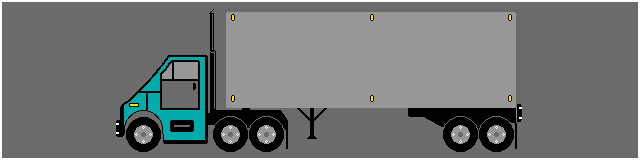
| QUESTION | Except when passing, what following distance must a tractor-trailer driver maintain from the vehicle ahead? | |
| ANSWER A | 50 meters | |
| ANSWER B | 90 meters | |
| ANSWER C | 120 meters | |
| ANSWER D | 150 meters | |
| CORRECT ANSWER | B | |
| 8121-300.jpg | ||
| SNO. | 2 |
| QUESTION | The trailer pulled by the tractor is starting to skid because the wheels are locked. To regain control: |
| ANSWER A | Release all the brake systems until the skid is corrected. |
| ANSWER B | Apply the tractor brakes only. |
| ANSWER C | Speed up to keep the tractor ahead of the trailer. |
| ANSWER D | Pump the trailer brakes until the trailer straightens. |
| CORRECT ANSWER | A |
| SNO. | 3 |
| QUESTION | You are in the process of coupling a tarctor to a trailer and have backed up to the front of the trailer. As soon as the alignement is correct, what should you do before backing under the trailer? |
| ANSWER A | Connect the electrical cable |
| ANSWER B | Connect the ground cable |
| ANSWER C | Connect the trailer coupling mechanism |
| ANSWER D | Check and, if necessary, adjust the height of the semitrailer using the landing gear |
| CORRECT ANSWER | D |
| SNO. | 4 | |
| QUESTION | You are backing under a low trailer in low gear. As soon as the fifth whell engages the kingpin, you should: | |
| ANSWER A | Accelerate slightly so the fifthe wheel lock meshanism engages | |
| ANSWER B | Quickly release the trailer brakes | |
| ANSWER C | Steer towards the left and advance slightly | |
| ANSWER D | Depress the clutch pedal and stop the tractor | |
| CORRECT ANSWER | D | |
9050-300.jpg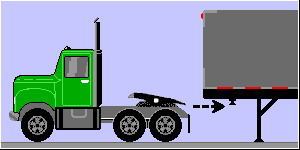 | ||
| SNO. | 5 | |
| QUESTION | It is always better to use a helper when reversing. The helper should stand: | |
| ANSWER A | On the right near the center of the trailer | |
| ANSWER B | Behind the vehicle off to the left | |
| ANSWER C | to the left infront of you | |
| ANSWER D | on the right behind the trailer | |
| CORRECT ANSWER | B | |
8131-300.jpg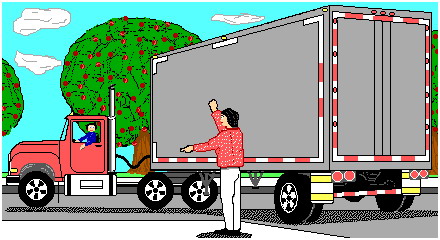 | ||
| SNO. | 6 | |
| QUESTION | Backing up requires a coordinated movement. For example, to back into a right turn, the tractor must: | |
| ANSWER A | make a right angle | |
| ANSWER B | Follow an S shape | |
| ANSWER C | Steer towards the side where you want the trailer to go | |
| ANSWER D | It makes no difference | |
| CORRECT ANSWER | B | |
7810-300.jpg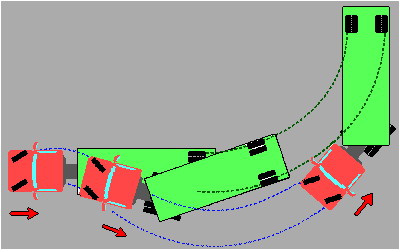 | ||
| SNO. | 7 | |
| QUESTION | If you must reverse without a helper, It is better to: | |
| ANSWER A | Turn towards the right, checking the left mirror | |
| ANSWER B | Turn towards the left, checking the right mirror. | |
| ANSWER C | It doesn't make any difference. | |
| ANSWER D | Back up staright, using the mirrors only. | |
| CORRECT ANSWER | B | |
8132-300.jpg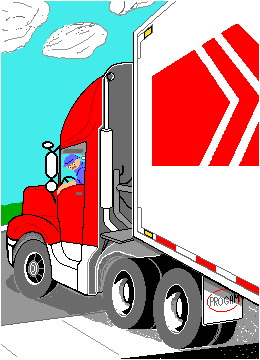 | ||
| SNO. | 8 |
| QUESTION | You have finished your work day and you intend to separate the tractor from the trailer. What should you do first? |
| ANSWER A | Lower the trailer landing gear (trailer legs) |
| ANSWER B | Park in an adequate location to uncouple the trailer |
| ANSWER C | Apply the parking brake |
| ANSWER D | Release the "fifth whell" lock meshanism |
| CORRECT ANSWER | B |
| SNO. | 9 |
| QUESTION | Once you have started backing up with a tractor-trailer you should: |
| ANSWER A | Move forward only if the trailer begins to jackknife |
| ANSWER B | Stop as often as necessary, but never move forward more than once |
| ANSWER C | Move forward only if the tractor if about to cross a curbstone or sidewalk. |
| ANSWER D | Move forward each time the trailer moves too far out of line |
| CORRECT ANSWER | D |
| SNO. | 10 |
| QUESTION | When backing a tractor-trailer, to guide the rear of the trsiler in a given direction, the steering wheel must be turned: |
| ANSWER A | so that the trailer is always completely visible in the side mirrors |
| ANSWER B | in the direction opposite to that which is desired |
| ANSWER C | in the the same direction as that which is desired |
| ANSWER D | with rapid hand-over-havd movements to force action in the fifth wheel |
| CORRECT ANSWER | B |
| SNO. | 11 |
| QUESTION | While the motor is runnign, should you go under the trailer check if there are any rocks or other objects between the wheels? |
| ANSWER A | never |
| ANSWER B | yes, if the "maxi" are applied on the tractor and the trailer |
| ANSWER C | yes if the "maxi" are applied on the tractor |
| ANSWER D | no, except when the service brakes are applied |
| CORRECT ANSWER | A |
| SNO. | 12 |
| QUESTION | To couple a tractor to 3 trailers, the first step would be to: |
| ANSWER A | couple the tractor to the first trailer then to the second using the method for double trailers |
| ANSWER B | couple the tractor to the third trailer |
| ANSWER C | couple the tractor to the second trailer, then to the third using the method for double trailers |
| ANSWER D | couple the tractor to the diabolo (converter dolly) |
| CORRECT ANSWER | C |
| SNO. | 13 | |
| QUESTION | If the brake cylinder is equipped with the spring brake actuators, what is the best order to hitch a semi trailer? | |
| ANSWER A | Back up the tractor, hook up the hoses, check the lock meshanism and check the trailer brakes | |
| ANSWER B | check the trailer brakes, back up the tractor, check the lock mechanism then hook up the hoses. | |
| ANSWER C | back under the semi trailer, check the lock mechanism, visually check the hitch, raise the landing gear, then hook up the electrical cable and trailer brake hoses | |
| ANSWER D | back up the tractor, check the trailer brakes hook up the hoses and check the lock mechanism | |
| CORRECT ANSWER | C | |
| 9050-300.jpg | ||
| SNO. | 14 | |
| QUESTION | The red knob (trailer air supply) opens a value to supply the trailer with compresses air. This knob also applies or releases the parking brakes on: | |
| ANSWER A | the tractor and the trailer | |
| ANSWER B | The trailer only | |
| ANSWER C | the tractor only | |
| ANSWER D | the tractor or the trailer | |
| CORRECT ANSWER | B | |
9027-000.jpg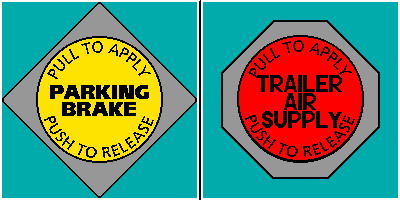 | ||
| SNO. | 15 | |
| QUESTION | If the tractor is coupled to a trailer and you pull the yellow parking brake knob, the brakes are applied on: | |
| ANSWER A | the tractor only | |
| ANSWER B | the trailer only | |
| ANSWER C | on the tractor-trailer | |
| ANSWER D | on either one as you wish | |
| CORRECT ANSWER | C | |
| 9027-000.jpg | ||
| SNO. | 16 | |
| QUESTION | While driving, this yellow control knob must be pushed in. When pulled out, air is released from the brake cylinders allowing the springs to apply the brakes. In addition to parking, when can you use this control? | |
| ANSWER A | to control the trailer when descending a hill | |
| ANSWER B | to straighten the rig when it jackknifes | |
| ANSWER C | for emergency braking | |
| ANSWER D | to slow down when backing up | |
| CORRECT ANSWER | C | |
| 9027-000.jpg | ||
| SNO. | 17 | |
| QUESTION | This hand brake lever controls the air flow from the compresser's air reservoir to the brake cylinders of the trailer only. You may use it . . . | |
| ANSWER A | as a parking brake | |
| ANSWER B | when driving down a hill | |
| ANSWER C | when coupling a trailer | |
| ANSWER D | to straighten the tractor-trailer | |
| CORRECT ANSWER | C | |
9025-000.jpg | ||
| SNO. | 18 |
| QUESTION | What is the major consequence of using the hand brake to slow or stop the semi-trailer? |
| ANSWER A | the parking and stopping will be smoother. |
| ANSWER B | the trailer wheels may brake |
| ANSWER C | the trailer brakes overheat and may fail to perform |
| ANSWER D | the brakes lights don't turn on and you risk being hit from behind |
| CORRECT ANSWER | C |
| SNO. | 19 |
| QUESTION | When a semitrailer is hitched to a tractor, the tractor service brake hose coupler must be connected to the trailer service line coupler. (glad hands) The same applies for the emergency brake line. |
| ANSWER A | the service brake couplers are blue and the emergency are red |
| ANSWER B | the service brake couplers are red and the emergency are blue |
| ANSWER C | colors vary with vehicles |
| ANSWER D | you can, without risk, mix the colors |
| CORRECT ANSWER | A |
| SNO. | 20 |
| QUESTION | To brake safetly, how should you adjust the brakes on a semi-trailer? |
| ANSWER A | equal on the tractor and on the trailer |
| ANSWER B | tighter on the tractor than on the trailer |
| ANSWER C | tighter on the trailer than on the tractor |
| ANSWER D | it doesn't matter. |
| CORRECT ANSWER | A |
| SNO. | 21 |
| QUESTION | The hand brake lever should not be used to keep a tractor-trailer parked when the engine is off, because: |
| ANSWER A | the air pressure will increase and may cause an air hose rupture |
| ANSWER B | this brake applies the tractor brakes only |
| ANSWER C | this brake applies the trailer brakes only |
| ANSWER D | an air leak may cause the brakes to release |
| CORRECT ANSWER | D |
| SNO. | 22 |
| QUESTION | Except when passing, what following distance must drivers of a road train keep between their vehicle and the one ahead of them? |
| ANSWER A | 150 meters |
| ANSWER B | 90 meters |
| ANSWER C | 500 meters |
| ANSWER D | 300 meters |
| CORRECT ANSWER | A |
| SNO. | 23 |
| QUESTION | How far from a railroad crossing must the driver of a road train stop? |
| ANSWER A | 5 meters |
| ANSWER B | 8 meters |
| ANSWER C | 10 meters |
| ANSWER D | it does not have to stop |
| CORRECT ANSWER | A |
| SNO. | 24 |
| QUESTION | The driver of a road train must obey a speed limit of: |
| ANSWER A | 90 km/h |
| ANSWER B | 100km/h |
| ANSWER C | 80 km/h |
| ANSWER D | 60 km/h |
| CORRECT ANSWER | A |
| SNO. | 25 |
| QUESTION | To obtain the endorsment required to drive a road train, you must have driven tractor-trailers with a gross vehicle weight of 11,00 kg or more for: |
| ANSWER A | 2 years |
| ANSWER B | 3 years |
| ANSWER C | 4 years |
| ANSWER D | 5 years |
| CORRECT ANSWER | D |
| SNO. | 26 |
| QUESTION | When driving a truck with more than one trailer (road train) : |
| ANSWER A | the lighter trailer should always be coupled to the tractor |
| ANSWER B | these types of trucks may not be operated unless the trailers weigh the same |
| ANSWER C | the longest trailer should always be coupled to the tractor regardless of weight |
| ANSWER D | the heaviest trailer should always be coupled to the tractor |
| CORRECT ANSWER | D |
| SNO. | 27 |
| QUESTION | Which of these would not cause a tractor-trailer to jackknife? |
| ANSWER A | the drive wheels lock up |
| ANSWER B | tries lose traction as you lock the brakes |
| ANSWER C | the gas pedal is slowly released |
| ANSWER D | the trailer brakes are applied or the hand brake is applied |
| CORRECT ANSWER | C |
| SNO. | 28 |
| QUESTION | On a curve, a tractor-trailer can be induced to skid if the driver: |
| ANSWER A | over-accelerates |
| ANSWER B | brakes too hard |
| ANSWER C | downshifts too abruptly |
| ANSWER D | any of these |
| CORRECT ANSWER | D |
| SNO. | 29 |
| QUESTION | If you apply the brakes too hard and lock the wheels intiating a skid, you should: |
| ANSWER A | release the brake pedal and press the accelerator to the floor |
| ANSWER B | ease off the brake pedal and then re-apply firmly |
| ANSWER C | release the brake pedal |
| ANSWER D | downshift immediately |
| CORRECT ANSWER | C |
| SNO. | 30 |
| QUESTION | If you lock the wheels of your semi-trailer and then use the trailer brakes only, this will help you to: |
| ANSWER A | regain control |
| ANSWER B | avoid skidding |
| ANSWER C | drive in a straight line |
| ANSWER D | jackknife |
| CORRECT ANSWER | D |